China Promotes Open Markets in Hong Kong While Still Steering Stocks and the Yuan
Senior Chinese officials pitched openness and support for Hong Kong at a global finance summit. Bloomberg points out that Beijing still keeps a firm hand on its stock market and currency.
For educational purposes only. Not investment advice.
- At a Hong Kong finance summit, Chinese officials promised support for the city as a global financial center and said they would encourage listings there.
- A central bank deputy governor said direct financing has overtaken bank loans for the first time, according to BigGo Finance.
- Bloomberg says this talk of openness comes while Beijing keeps steering its stock market and the yuan.
- The underlying question is whether China's promises of openness fit with its habit of managing markets.
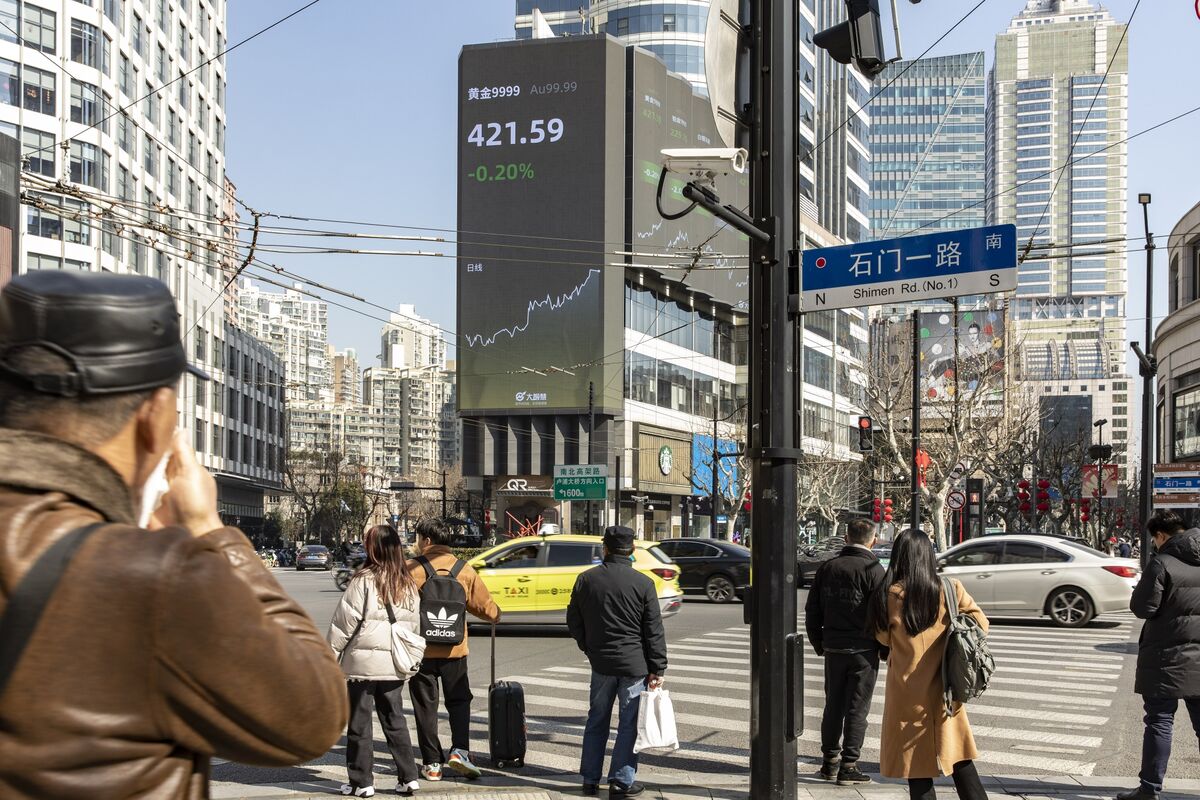
Senior Chinese officials used a high-profile finance gathering in Hong Kong to tell global investors that China's markets are open for business. Coverage from several outlets describes promises to back Hong Kong as a financial hub, to encourage more company listings there, and to widen the international use of China's currency.
Bloomberg's headline adds a qualifier. It says China is talking up market openness while still steering its stocks and the yuan. That tension between welcoming foreign money and keeping control is the main thing to understand about this story.
What happened
The Lufkin Daily News ran a photo caption showing Li Chao, vice chairman of the China Securities Regulatory Commission (CSRC), speaking at the Global Financial Leaders' Investment Summit in Hong Kong. The CSRC is China's main stock market regulator.
Reuters reports that the regulator plans to encourage listings in Hong Kong, meaning more Chinese companies selling shares to the public on Hong Kong's stock exchange. The South China Morning Post reports that Vice-Premier He Lifeng, one of China's top economic officials, promised support for Hong Kong as a global financial center.
BigGo Finance reports remarks from Zou Lan, a deputy governor of the People's Bank of China (PBOC), the country's central bank. According to that report, Zou said the share of "direct financing" has topped bank loans for the first time. Zou also said Hong Kong will see new opportunities as the renminbi (RMB) becomes more international.
How outlets are reading it
Reuters, the South China Morning Post and BigGo Finance mostly report the officials' messages directly. Their focus is on policy promises: more listings, support for Hong Kong, and a bigger global role for the yuan.
Bloomberg's framing is more skeptical. Its headline sets the openness message next to Beijing's ongoing efforts to guide stock prices and the currency's value. The headline doesn't spell out the details. As general background, though, China's authorities have long used tools like state-backed funds that buy shares and daily guidance on the yuan's exchange rate to limit sharp swings. Bloomberg's point is that these two approaches can sit uneasily together: officials invite global investors in while still deciding how far prices are allowed to move.
Background: why Hong Kong and the yuan matter
Hong Kong is part of China but runs its own financial system, with a freely traded currency and legal rules closer to international norms. For decades it has been the main gateway between mainland China and global investors. When Beijing says it supports Hong Kong's role, that usually means it wants foreign money to keep flowing into Chinese companies through the city.
The comment about direct financing points to a shift in how Chinese companies raise money. In direct financing, a company gets money straight from investors by selling stocks or bonds. In indirect financing, it borrows from a bank. China's economy has historically leaned heavily on bank loans, so direct financing overtaking loans by the measure Zou cited would be a notable change, if it holds up.
Why it matters for everyday people
Most readers won't trade in Hong Kong directly. Many retirement funds and index funds do hold Chinese and Hong Kong stocks, though, so how open and predictable those markets are can affect a lot of ordinary portfolios indirectly.
The broader question is trust. Global investors generally want markets where prices are set freely and rules are clear. Official promises of openness count for more when they match what authorities actually do, and how closely the two line up is the gap Bloomberg's headline is pointing at.
| Publisher | Their angle | Original |
|---|---|---|
| Bloomberg | Says the openness message clashes with ongoing state control of stocks and the yuan | Read ↗ at Bloomberg |
| Reuters | Regulator plans to encourage company listings in Hong Kong | Read ↗ at Reuters |
| South China Morning Post | Top economic official promises support for Hong Kong's financial-hub role | Read ↗ at South China Morning Post |
| The Lufkin Daily News | Photo coverage of a CSRC vice chairman speaking at the summit | Read ↗ at The Lufkin Daily News |
| BigGo Finance | Central bank official on direct financing passing loans and on yuan internationalization | Read ↗ at BigGo Finance |
Words to know
- China Securities Regulatory Commission (CSRC)
- China's main government agency for overseeing stock markets, roughly comparable to the US Securities and Exchange Commission.
- Direct financing
- When companies raise money straight from investors by selling stocks or bonds, rather than borrowing from a bank.
- Renminbi (RMB) / yuan
- China's currency. Renminbi is the official name, and yuan is the unit, like 'pound sterling' versus 'pound.'
- Internationalization
- Efforts to get a currency used more widely outside its home country for trade, investment and savings.
Questions readers ask
What does it mean that China is 'steering' stocks and the yuan?
Bloomberg's headline doesn't give details. As general background, Chinese authorities have often stepped into markets, for example through state-linked buying of shares or by guiding the yuan's daily exchange rate, to keep prices from swinging sharply.
Why are more listings in Hong Kong a big deal?
Each new listing lets a company raise money from global investors. It also gives those investors more ways to put money into Chinese businesses, which helps Hong Kong stay an important financial hub.
Does this news affect me if I don't invest in China?
Probably not directly. Some broad funds, including some retirement funds, hold Chinese or Hong Kong shares, so changes in how those markets work can affect them indirectly.
For educational purposes only. Not investment advice. We do not recommend any stock, fund, broker or trading platform. Headlines are sourced from Google News · Business; every story links to the original publishers.