What National Disability Employment Awareness Month Is, and Why Local Groups Mark It
A North Carolina vocational group and Oregon's state employment agency both marked the October observance. Here is what the month is and how job partnerships for people with disabilities usually work.
For educational purposes only. Not investment advice.
- WITN reports that ECVC highlighted its employer partnerships during disability awareness month.
- KTVZ reports that the Oregon Employment Department celebrated National Disability Employment Awareness Month.
- The US observes the month every October, with the US Department of Labor leading it.
- Local agencies and nonprofits often connect job seekers with disabilities to employers and give ongoing support.
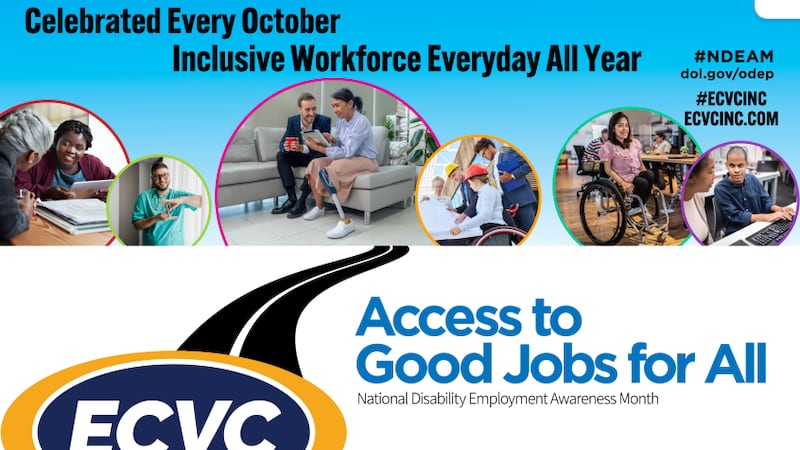
Every October, employers, agencies, and nonprofits across the US focus on people with disabilities and their place in the workforce. This year, two local news stations covered groups marking the month in their own regions.
WITN, a station in eastern North Carolina, reports that ECVC highlighted its employment partnerships during disability awareness month. KTVZ in central Oregon reports that the Oregon Employment Department celebrated National Disability Employment Awareness Month.
The stories are small and local. They still give a useful look at how disability employment works in practice, and why the observance comes back every year.
What happened
The headlines are the only details we have. WITN says ECVC used the month to point to its partnerships with employers. KTVZ says Oregon's state employment agency held its own recognition of the observance.
Neither headline gives numbers, names of partner businesses, or specific programs. So this article doesn't guess at those details. What the two reports have in common is timing: a nonprofit-style organization in one state and a government agency in another both used October to draw attention to jobs for people with disabilities.
Background: what the month is
National Disability Employment Awareness Month, often shortened to NDEAM, is a federal observance held every October. The US Department of Labor leads it through its Office of Disability Employment Policy. That office usually picks a yearly theme and shares materials that employers and community groups can use.
The observance started in 1945 as a week focused on hiring veterans and others with physical disabilities. Congress later expanded it to a full month and widened it to cover all kinds of disabilities. Today it covers physical, sensory, intellectual, and mental health conditions.
How employment partnerships usually work
Broadly speaking, groups that help people with disabilities find work often act as a go-between. They may train job seekers, help them write resumes, coach them through interviews, and stay in touch once they're hired. Employers who partner with these groups get a pipeline of candidates and support with onboarding.
Some programs use job coaches, who work alongside a new employee at first and then step back as the person settles in. Others help employers set up workplace accommodations. Those are changes to tools, schedules, or tasks that let someone do the job well.
State employment agencies, like Oregon's, usually run job-search services open to everyone. Many also work with state vocational rehabilitation programs that focus on job seekers with disabilities.
Why it matters for everyday people
Government labor data has long shown that people with disabilities are employed at much lower rates than people without disabilities. Awareness months are one way organizations try to close that gap. They spotlight successful hires, recruit new employer partners, and let job seekers know services exist.
For workers, the practical point is that local help is often available. That can come from state employment offices or from community organizations like the one WITN covered. For small business owners, these partnerships can be a way to find staff, often with some support built in.
Under the Americans with Disabilities Act, most employers with 15 or more workers must make reasonable accommodations unless doing so would cause significant hardship. Knowing that basic rule helps both job seekers and employers understand what to expect.
| Publisher | Their angle | Original |
|---|---|---|
| WITN | Local vocational group spotlights its employer partnerships | Read ↗ at WITN |
| KTVZ | State employment agency marks the national observance | Read ↗ at KTVZ |
Words to know
- NDEAM
- National Disability Employment Awareness Month, a federal observance every October focused on workers with disabilities.
- Reasonable accommodation
- A change to a job, workspace, or schedule that helps a person with a disability do the work, such as special software or flexible hours.
- Vocational rehabilitation
- Government-funded services that help people with disabilities prepare for, find, and keep jobs.
- Job coach
- A support worker who helps a new employee learn a job on-site, then gradually steps back.
Questions readers ask
Is National Disability Employment Awareness Month only for people with physical disabilities?
No. It started out focused on physical disabilities, but today it covers all kinds, including intellectual, sensory, and mental health conditions.
Where can someone with a disability get help finding a job?
Common places to start are your state employment office, your state's vocational rehabilitation program, and local nonprofits that work with employers.
Do the news reports say how many people were hired?
No. The headlines don't include hiring numbers or program details, so we can't say.
For educational purposes only. Not investment advice. We do not recommend any stock, fund, broker or trading platform. Headlines are sourced from Google News · Business; every story links to the original publishers.